Goals turn reflection into action. They help you decide what you are working toward and what the next step should be.
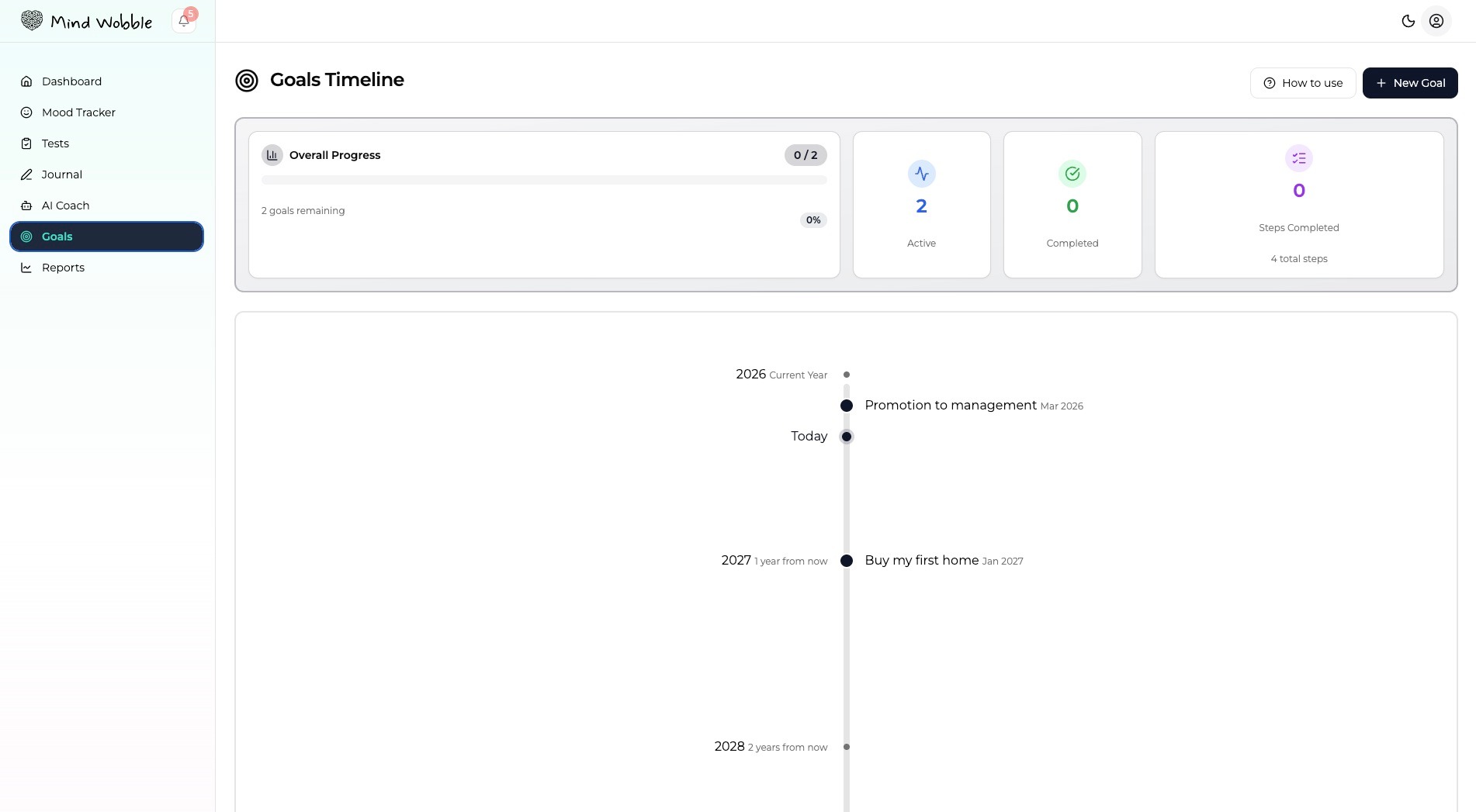
Create a goal
A goal includes:
- Title.
- Description.
- Category.
- Start date.
- Target date.
- Priority.
- Optional steps.
The title should be clear enough that you can understand it at a glance. The description can explain why the goal matters.
Choose a category
Goal categories include:
- Career.
- Finances.
- Health.
- Relationships.
- Personal Growth.
- Recreation & Leisure.
- Physical Environment.
- Spirituality.
Choose the closest category. The category helps you see whether your goals are balanced across life areas.
Add steps
Steps make a goal easier to act on. Each step can include a description and due date.
Good steps are specific and small enough to complete. If a step feels intimidating, split it again.
Use priority carefully
Priority helps you decide what deserves attention first. Avoid marking everything as high priority. If every goal is urgent, the dashboard and coaching context become less useful.
How goals connect with coaching
Goals give the AI Coach direction. A coaching conversation can help you clarify a goal, break it into steps, explore blockers, or choose the next action.
Frequently asked questions
How many goals should I keep active at once?
Most people get more out of one to three active goals at any time. Too many active goals dilutes attention and makes the dashboard noisier than it needs to be.
What happens when I reach the target date?
The target date is a marker, not a deadline enforced by the app. You can mark progress, extend the date, or close the goal once the work is done or no longer relevant.
Can I change a goal after creating it?
Yes. Title, description, dates, priority, category, and steps can all be edited as your understanding develops. Goals are meant to evolve as you learn more about what you actually want.
Why shouldn't every goal be high priority?
If everything is urgent, nothing is. Reserving high priority for the goal that genuinely needs attention now makes the dashboard and AI Coach more useful when picking a next action.
What if I set a goal and lose interest in it?
That is useful information. Closing or removing a goal is not failure. It often points to a values shift, a change in circumstances, or a goal that was set for the wrong reason. A short journal entry about what changed can be more valuable than the original goal.