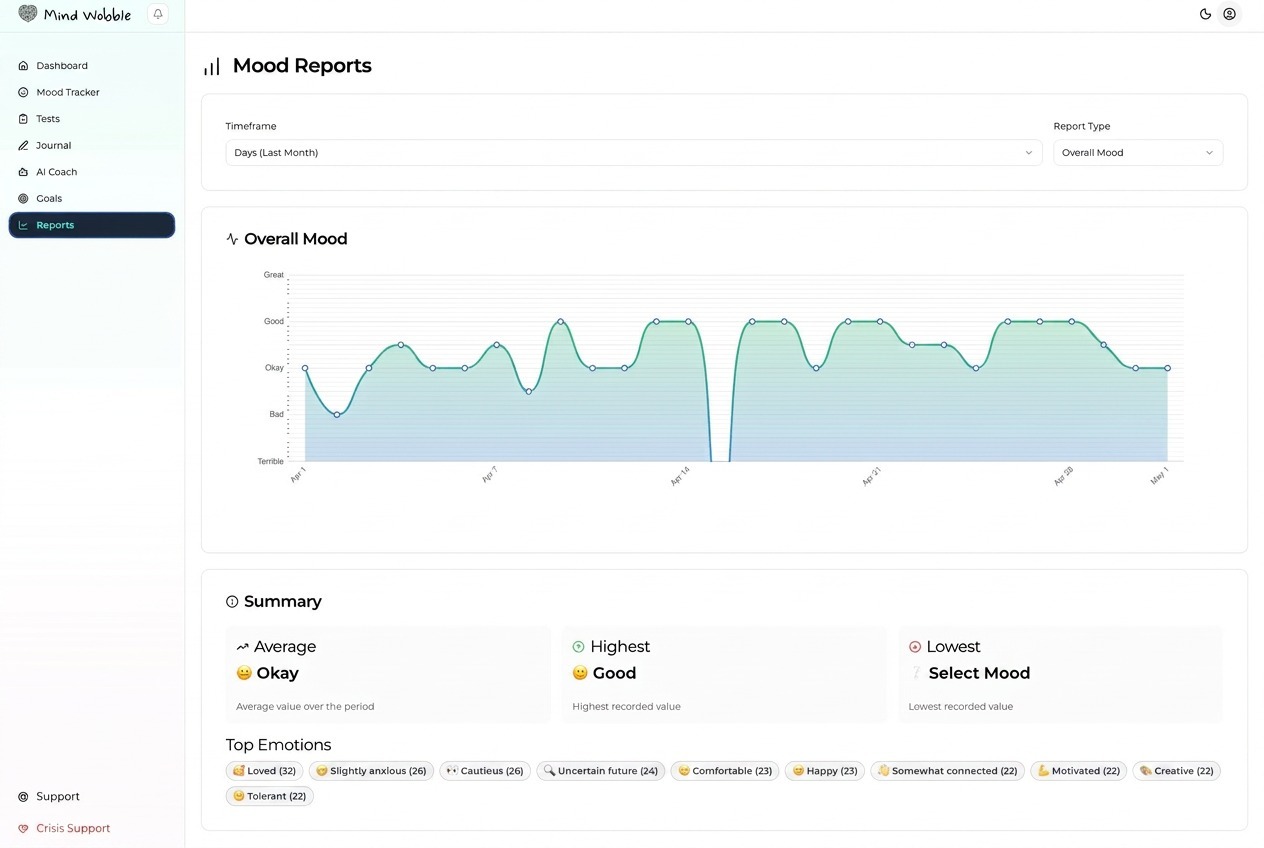
Reports turn your mood tracker entries into patterns. They help you step back from individual days and see what may be changing over time.
What reports can show
Reports can summarize:
- Mood.
- Sleep quality.
- Sleep duration.
- Physical health.
- Social interactions.
- Stress level.
Depending on the selected report, you may see averages, highs, lows, chart lines, and top emotions.
How to choose a timeframe
Use shorter timeframes when you want to understand a recent change. Use longer timeframes when you want to see broader patterns.
Good examples:
- Use days or weeks after a stressful event or routine change.
- Use months when reviewing sleep, exercise, or stress patterns.
- Use years only when you have enough history for the chart to mean something.
How to interpret trends
Reports are not a diagnosis. Treat them as prompts for better questions:
- Did my mood change when sleep duration changed?
- Are high stress days linked to specific sources?
- Does exercise show up near better mood or physical health scores?
- Do social interaction scores match how connected I feel?
If a pattern matters, bring it into journaling or coaching.
How reports connect with coaching
Reports help you notice what to ask the AI Coach about. Instead of asking a broad question, use a specific pattern:
My sleep quality has been lower for two weeks and my stress is higher. Help me think through what might be driving this.
Frequently asked questions
Why does my report look empty or jagged?
Reports need a steady stream of mood entries to draw a useful line. With only a handful of entries, charts can look spiky or sparse. A week or two of regular check-ins usually smooths things out.
How long should I track before reports become useful?
Two to four weeks of regular entries is a reasonable starting point for short-term patterns. Sleep, exercise, and stress patterns often need a month or more before they show clearly.
Can a report tell me whether I have depression or anxiety?
No. Reports are not a clinical assessment or diagnosis. They are prompts for better questions, and a way to notice changes worth bringing into journaling, coaching, or a conversation with a professional.
Why does a metric I want to see not appear?
A metric only appears when you log the underlying data in mood entries. If a chart looks empty, check whether sleep, stress, exercise, or social interaction values are being recorded in your check-ins.