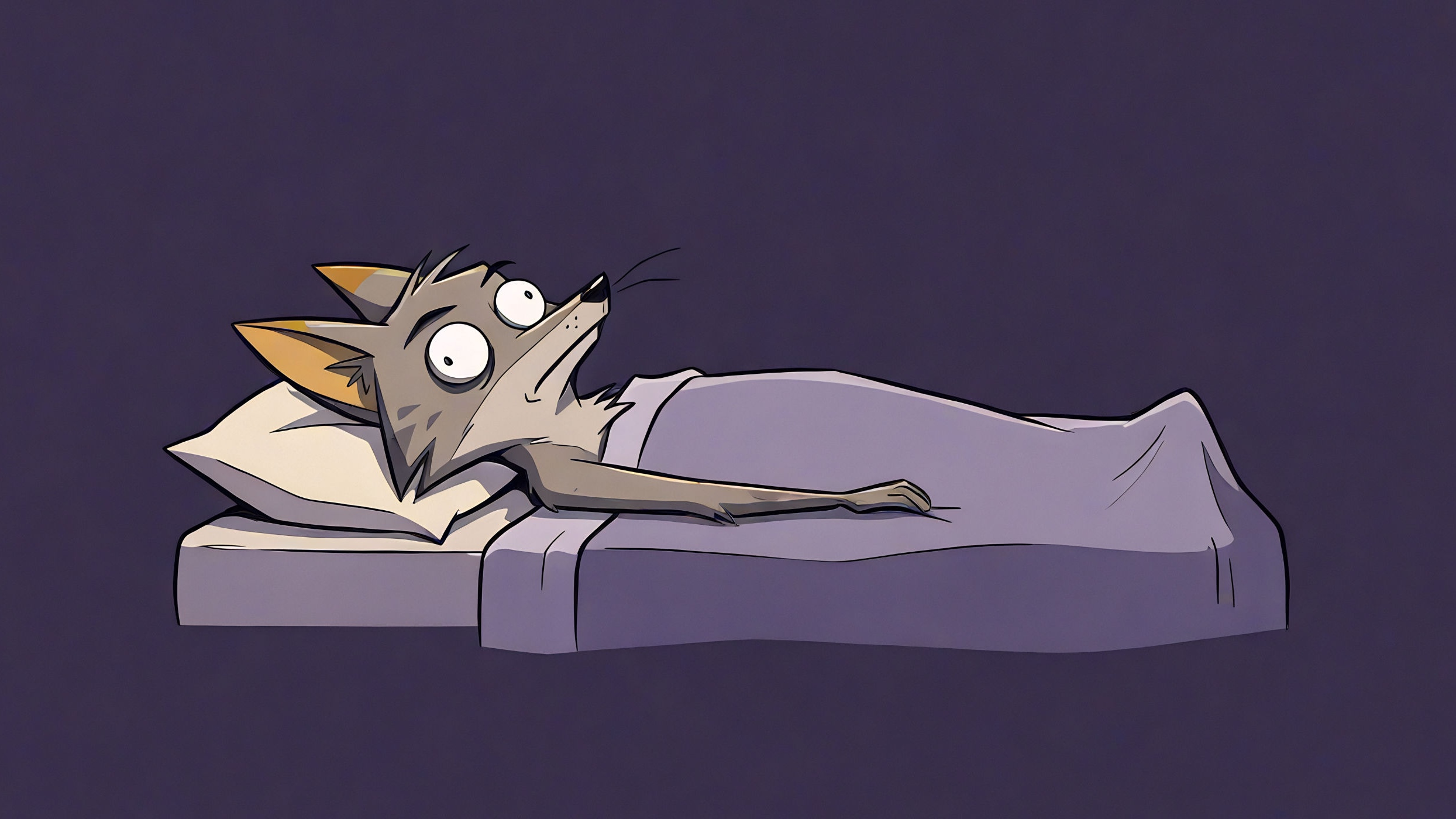
You know the feeling. You're lying in bed at 2am, eyes wide open, heart doing that annoying fluttery thing, while your brain helpfully replays every mildly embarrassing thing you've ever said. You're exhausted. You want to sleep. Your body wants to sleep. But something up there just won't stop firing.
Here's the thing: your brain actually has a built-in mechanism for calming itself down. A chemical whose entire job is to tell your overexcited neurons to sit down, be quiet, and stop catastrophising about that thing you said at a dinner party in 2017. That chemical is called GABA, and if you struggle with anxiety, racing thoughts, or sleepless nights, there's a decent chance yours isn't doing its job properly.
GABA (gamma-aminobutyric acid, if you want to impress someone at said dinner party) is the brain's primary inhibitory neurotransmitter. In plain English, it's the chemical responsible for putting the brakes on your nervous system. And when those brakes start to wear thin, the effects are more far-reaching than most people realise.
What GABA Actually Does (And Why You Should Care)
To understand GABA, you first need to understand that your brain runs on a balancing act between two forces: excitation and inhibition. Think of it like a car. Glutamate is the accelerator, firing neurons up and keeping you alert, focused, and responsive. GABA is the brake pedal, slowing things down so you can think clearly, stay calm, and eventually fall asleep.
According to the National Library of Medicine's overview of GABA physiology, GABA is the most abundant inhibitory neurotransmitter in the central nervous system. It works by causing what scientists call "hyperpolarisation" of neurons, which essentially means it makes nerve cells less likely to fire. Less firing means less excitation. Less excitation means a calmer, more regulated you.
When this system works well, you barely notice it. You feel alert when you need to be, calm when you don't, and sleepy when the day is done. But when the balance tips (too much glutamate, not enough GABA) it's like driving a car with a stuck accelerator and dodgy brakes. Your nervous system just keeps revving. (If your brain had a dashboard warning light for this, most of us would have been ignoring it for years.)
The glutamate-GABA cycle is one of the most fundamental processes in the brain. Interestingly, GABA is actually made from glutamate. Your brain converts its primary excitatory chemical into its primary calming one. It's a beautifully efficient system when it works. When it doesn't, the consequences show up in ways you'll probably recognise.
When GABA Runs Low: The Anxiety Connection
If you've ever described your anxiety as a feeling of being "wired but tired," you've essentially described what happens when GABA levels drop too low relative to glutamate. Your brain is stuck in go-mode with no reliable way to switch off.
This isn't just a theory. A 2003 review published in the Journal of Neural Transmission established that reduced GABAergic activity is present in both anxiety disorders and severe depression. More specifically, researchers using brain imaging have found significantly reduced GABA levels in the thalamus and amygdala of people with anxiety disorders. The amygdala, for those keeping score, is the part of your brain responsible for processing fear and threat. Having low levels of the very chemical designed to calm it down is, to put it mildly, not ideal. (For a broader look at what anxiety disorders actually involve, our guide to understanding anxiety disorders covers the symptoms, types, and treatment options.)
The research goes further. Panic disorder, generalised anxiety disorder, and post-traumatic stress disorder have all been linked to decreased GABA levels. And here's the telling part: drugs that enhance GABA transmission (like benzodiazepines) reliably reduce anxiety, while drugs that suppress it reliably increase it. The pharmaceutical industry has known about GABA's role in anxiety for decades. It's the reason medications like diazepam work at all.
But here's where it gets personal. You don't need a clinical anxiety diagnosis for low GABA to affect you. That persistent feeling of being on edge, the inability to fully relax even when everything is fine, the way your shoulders live somewhere near your ears: these can all be signs that your brain's braking system could use some support.
The Plot Twist: Your Gut Bacteria Make GABA Too
If you've been following the research on gut health and mental wellbeing (and if you read Mind Wobble, there's a fair chance you have), this next part might fascinate you.
Your brain isn't the only part of your body that produces GABA. Your gut bacteria do too. Specifically, certain strains of Lactobacillus, the same family of bacteria found in yoghurt, kefir, and other fermented foods, are prolific GABA producers.
The landmark study on this came from researchers at University College Cork in 2011. They fed mice a specific strain called Lactobacillus rhamnosus (JB-1) and watched what happened. The results were remarkable. The mice showed reduced stress hormones, less anxiety-related behaviour, and measurable changes in GABA receptor expression across multiple brain regions, with increases in the areas associated with emotional regulation and decreases in areas linked to stress and fear.
But the real plot twist? When the researchers cut the vagus nerve (the long, wandering nerve that connects the gut to the brain), every single one of these benefits vanished. The bacteria were still producing GABA, but without the vagus nerve to carry the message upstairs, the brain never got the memo. This confirmed what scientists had suspected: the vagus nerve acts as a direct communication highway between the gut microbiome and the brain. (If the vagus nerve is new to you, our piece on the vagus nerve and mental health is a good place to start.)
Further research has shown that this isn't a one-way street. The vagus nerve doesn't just carry signals from gut to brain; it's part of a bidirectional neuroimmunoendocrine pathway that influences immune function, stress hormones, and behaviour simultaneously. Your gut bacteria aren't just passive passengers. They're active participants in your mental health, and GABA is one of their most powerful tools.
This has practical implications. If your gut microbiome is depleted (through poor diet, antibiotics, chronic stress, or a lack of fermented foods), you may be reducing one of your body's natural sources of this calming neurotransmitter. It's one more reason why what you eat matters for how you feel, and not just in the "eat your vegetables" sense your parents meant. If you're curious about the broader gut-mental health picture, our article on probiotics and mental health goes deeper into the microbiome connection.
Do GABA Supplements Actually Work? (The Honest Answer)
Walk into any health food shop and you'll find GABA supplements stacked confidently on the shelves, typically promising calm, better sleep, and reduced anxiety. The packaging is reassuring. The reviews are glowing. But does swallowing a capsule of GABA actually do anything useful?
The honest answer is… it's complicated.
The main problem is something called the blood-brain barrier (BBB). This is a highly selective membrane that controls what gets from your bloodstream into your brain. It's excellent at its job, which is exactly the issue. For years, the dominant scientific view was that orally consumed GABA simply couldn't cross the BBB in meaningful quantities. If it can't reach the brain, the thinking went, it can't do much for your mood or anxiety.
Recent research has complicated this picture slightly. Scientists have identified a GABA transporter called GAT2/BGT-1 that may facilitate some GABA transport across the barrier, though the extent of this in humans remains unclear. A 2020 systematic review looking at oral GABA's effects on stress and sleep found "limited evidence for stress and very limited evidence for sleep benefits."
That same review raised another concern worth noting: much of the positive research on GABA supplements was conducted by researchers with potential conflicts of interest, often affiliated with companies that manufacture GABA products.
Does this mean GABA supplements are completely useless? Not necessarily. There's an emerging theory that oral GABA may work not by crossing the blood-brain barrier directly, but by acting on the enteric nervous system in the gut, which then signals the brain via (you guessed it) the vagus nerve. It's a plausible mechanism, but one that needs considerably more research before anyone can make confident claims.
The bottom line: if GABA supplements make you feel calmer, the effect is likely either modest, working through an indirect gut-brain pathway, or benefitting from a healthy placebo effect (which, for the record, is still a real effect on your actual brain). Just be wary of any brand promising miraculous results from a capsule. Your brain chemistry is more nuanced than that. And anyone telling you otherwise is probably trying to sell you something.
What the Science Says About Boosting GABA Naturally
If swallowing GABA directly is a questionable route, the good news is that there are well-researched ways to support your body's own GABA production. Some of them might surprise you.
Yoga (seriously, this one has strong evidence)
Yoga isn't just stretching in fancy leggings. In terms of GABA, it might be one of the most effective things you can do. A pilot study from Boston University School of Medicine found that a single session of yoga increased brain GABA levels by 27% in experienced practitioners. Twenty-seven percent. From one session.
A larger follow-up study compared 12 weeks of yoga to 12 weeks of walking (matched for metabolic effort, so this wasn't about one being "harder" exercise). The yoga group showed significantly greater improvements in mood and anxiety, and the improvements correlated directly with increased thalamic GABA levels. Walking helped too, but yoga had the edge when it came to calming brain chemistry.
Later research from the same team found that Iyengar yoga combined with coherent breathing also produced significant GABA increases, along with improvements in depression scores. The catch? You need to practise at least once a week to sustain elevated GABA levels.
Meditation
Meditation's effect on GABA is less directly measured but equally promising. Research published in Brain Stimulation found that meditation practice is linked to increased GABA-B modulated cortical inhibition, a mechanism associated with improved cognitive performance and emotional regulation. The theory is that meditation activates the prefrontal cortex, which stimulates areas of the thalamus involved in GABA production. Essentially, you're training your brain to produce more of its own calming chemical.
Magnesium
Here's one that flies under the radar. Magnesium isn't just for muscle cramps. It acts as a natural modulator of GABA receptors, increasing their activity, while simultaneously blocking NMDA receptors (the ones associated with excitatory, anxiety-promoting signals). It's essentially supporting GABA from both sides: boosting the brakes while easing off the accelerator.
A systematic review of clinical studies found that the majority of included studies demonstrated improvements in either sleep or anxiety outcomes with magnesium supplementation. Another study found that magnesium supplementation in elderly participants significantly increased sleep time and sleep efficiency.
Given that modern diets are frequently low in magnesium (thanks to soil depletion and processed foods), this is one of those rare cases where supplementation has both a plausible mechanism and reasonable clinical backing. (We covered magnesium's sleep benefits in more detail in our article on whether magnesium improves your sleep.)
L-Theanine
L-theanine is an amino acid found naturally in tea (particularly green tea), and it has a clever dual action. It's a structural analogue of glutamate that competes with glutamate for receptors while simultaneously increasing GABA production. So it's dampening the excitatory signal and boosting the calming one at the same time.
Research has shown that a combination of GABA and L-theanine decreased sleep latency (the time it takes to fall asleep) more effectively than either compound alone. Meanwhile, a randomised controlled trial found that a single dose of L-theanine significantly increased calming alpha brainwaves and reduced salivary cortisol (a stress marker) compared to placebo.
Fermented Foods
Remember those GABA-producing gut bacteria? You can feed them. Fermented foods like yoghurt, kefir, kimchi, sauerkraut, and sourdough bread contain lactic acid bacteria that naturally produce GABA during the fermentation process. Research has identified specific strains in kefir and kimchi that produce meaningful amounts of GABA.
You won't get a therapeutic dose from a single serving of sauerkraut, but regularly including fermented foods in your diet supports the gut microbiome's capacity to produce GABA over time. It's a long game, not a quick fix, but it's one backed by an increasingly robust body of evidence.
GABA, Sleep, and the Vicious Cycle
If anxiety is GABA's daytime calling card, sleep is where it does its most critical nighttime work. GABA is one of the primary neurotransmitters responsible for initiating and maintaining sleep, working alongside adenosine in a region of the hypothalamus called the ventrolateral preoptic nucleus. When GABA levels are healthy, this system helps you transition from wakefulness to sleep smoothly. When they're not, you get the 2am ceiling-staring sessions we started with.
The relationship between GABA and sleep is more complicated than simply "more GABA equals better sleep," though. A study measuring brain GABA levels in people with insomnia found something counterintuitive: GABA levels were actually 12% higher in people with insomnia than in good sleepers. The researchers interpreted this as an allostatic response, essentially the brain cranking up GABA production in a desperate attempt to counteract chronic hyperarousal. Think of it like your brain flooring the brake pedal, but the car is going so fast it still won't stop.
What was consistent across both groups, however, was that higher GABA levels correlated with less time awake after initially falling asleep. So while the relationship isn't perfectly straightforward, GABA's role in maintaining sleep once you're there appears reliable.
This creates a vicious cycle that many people with anxiety will recognise. Anxiety suppresses effective GABA functioning during the day. Poor GABA functioning makes it harder to fall asleep at night. Poor sleep increases anxiety the next day. Which further disrupts GABA. And round it goes.
Breaking this cycle doesn't require fixing everything at once. Even improving one part of the loop (better sleep hygiene, a regular yoga practice, dietary changes that support GABA production) can create enough of a shift to start the whole system moving in a better direction.
Small Shifts, Big Difference: Your GABA-Friendly Action Plan
None of what you've just read requires an overhaul of your life. Supporting your GABA system is less about dramatic interventions and more about consistent, small choices that add up. Here's what the evidence actually supports, organised by how much effort they require.
Start here (minimal effort):
- Drink green tea. The L-theanine content supports GABA production while the ritual itself can be calming. Aim for one to three cups daily, ideally earlier in the day to avoid any caffeine interference with sleep.
- Check your magnesium intake. Dark chocolate, spinach, pumpkin seeds, and almonds are all rich sources. If your diet is lacking, a magnesium glycinate or threonate supplement taken in the evening may help with both GABA support and sleep.
- Add fermented foods to your weekly shop. Yoghurt with live cultures, kefir, kimchi, or sauerkraut all support the gut bacteria that produce GABA. Even small, regular amounts make a difference over time.
Build on it (moderate commitment):
- Try yoga, even once a week. The research is unusually strong here. A single weekly session has been shown to sustain elevated GABA levels. You don't need hot yoga or advanced poses; gentle, breath-focused practice appears to be effective.
- Start a basic meditation practice. Even ten minutes of focused breathing or body scanning can support GABAergic activity in the brain. Consistency matters more than duration.
- Prioritise sleep hygiene. Since GABA is essential for sleep initiation, give it the best chance of working: consistent bedtime, cool room, screens off an hour before bed. You've heard it before because it works. (Our sleep hygiene guide has the full rundown.)
Go deeper (for those who want more):
- Talk to your GP about magnesium or L-theanine supplementation, particularly if you have persistent anxiety or sleep difficulties. These have reasonable evidence behind them and a good safety profile, but it's always worth discussing with a professional.
- Consider your gut health more broadly. If you've had rounds of antibiotics, a diet high in processed foods, or ongoing digestive issues, your gut microbiome may not be producing GABA efficiently. A targeted probiotic (look for strains of Lactobacillus rhamnosus or Lactobacillus plantarum) could be worth exploring.
- Be sceptical of standalone GABA supplements. They're not harmful, but the evidence for oral GABA crossing the blood-brain barrier is weak. Your money and effort are better spent on strategies that support your body's own production.
A quick but important note: none of this replaces professional mental health support. If anxiety is significantly affecting your daily life, these strategies work best alongside, not instead of, guidance from a qualified professional. GABA is one piece of a much larger puzzle, but it's a piece worth understanding.
The science on GABA is still evolving, and researchers are learning more about the gut-brain connection every year. What's already clear is that this quiet, underappreciated neurotransmitter plays a far bigger role in your mental health than most people realise. The good news? You don't need to understand every mechanism to start supporting it. A cup of green tea, a weekly yoga class, a jar of kimchi in the fridge. Nothing that requires a prescription or a lifestyle overhaul. But your anxious brain might just thank you for them.