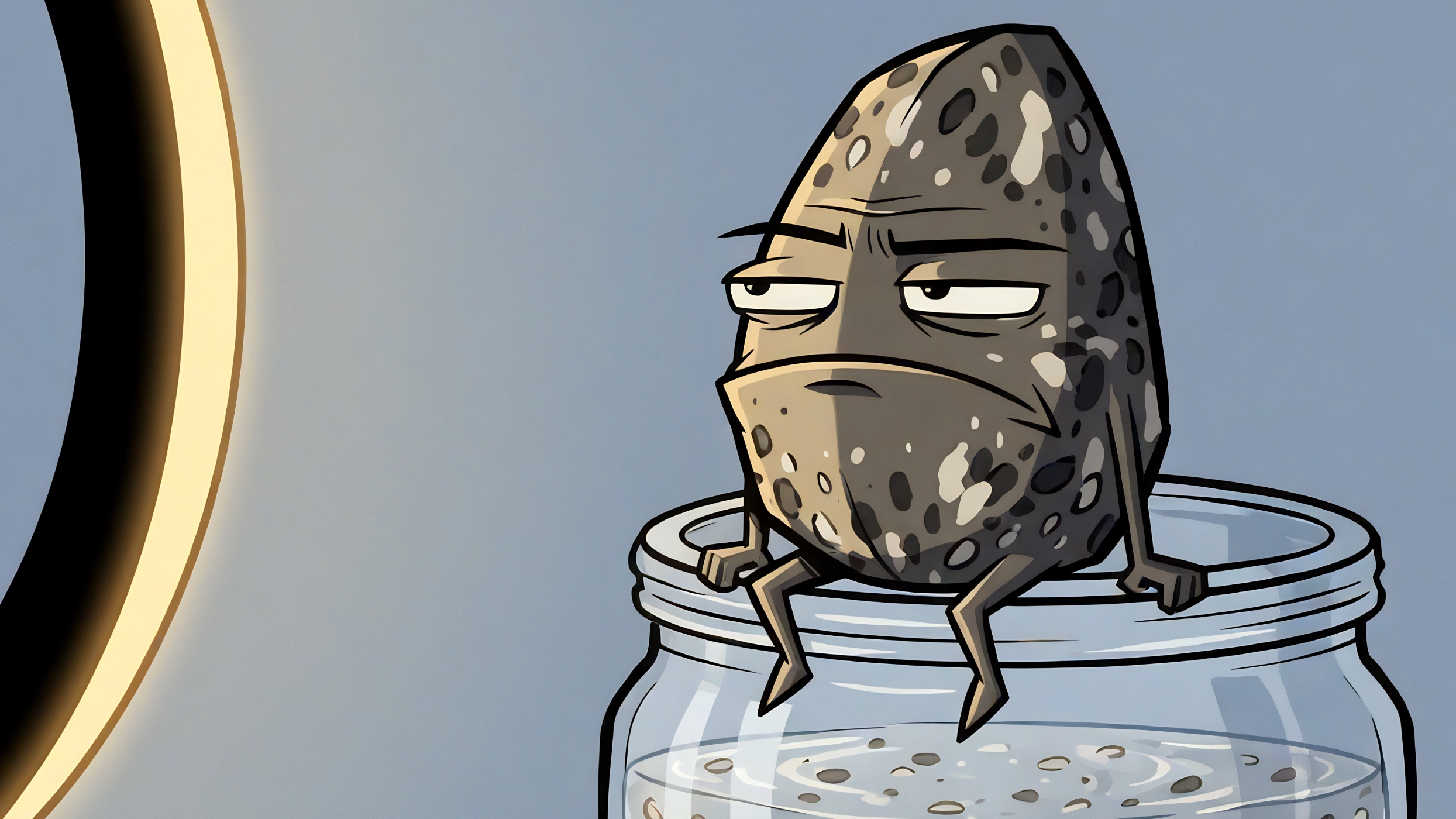
Somewhere right now, someone is filming themselves pouring chia seeds into a jar of water, stirring dramatically, and promising their 400,000 followers that this will flatten their stomach, sharpen their mind, fix their sleep, and possibly heal their relationship with their mother. The comments are mostly hearts and flame emojis; nobody in the thread has asked for a citation.
It is an odd little seed to have caused all this fuss. Chia is Salvia hispanica, a flowering plant from Central America that the Aztecs and Mayans grew as a staple food thousands of years before it became a smoothie topping. For most of human history, nobody made any claims about it at all; they just ate it. Then, around 2012, chia drifted into the wellness lexicon, got stamped with the word "superfood," and has been riding that label ever since.
The wellness internet has a habit of turning perfectly nice foods into miracle cures and then, a few years later, quietly abandoning them for the next one. Chia has survived the cycle longer than most, which is interesting, because the actual mental health case for it is more modest and more fascinating than the marketing suggests. Strip away the gel-water videos and the breathless headlines, and you're left with something quieter: a seed that, through three separate biological mechanisms, may give your brain a small and genuine assist. Not a cure. Not a transformation. A nudge.
What's Actually Inside a Chia Seed
Two tablespoons of chia, roughly 28 grams, gets you about 140 calories, 4 grams of protein, 11 grams of fibre, and around 5 grams of plant-based omega-3 fat, according to the Harvard Nutrition Source. It also delivers calcium, phosphorus, magnesium, a respectable amount of zinc, and small quantities of polyphenols and antioxidants. A 2019 review in the journal Nutrients walks through the full chemical profile in satisfying detail, and if you enjoy reading about fatty acid ratios (some of us do; no judgement), it's a good time.
The numbers that matter most for a mental health angle are the fibre, the omega-3, and the magnesium. Those three nutrients sit at the intersection of nearly every major pathway linking food to mood: inflammation, the gut-brain axis, neurotransmitter production, and blood sugar regulation. Chia is unusual because it delivers decent amounts of all three in a single, cheap, shelf-stable ingredient.
That does not make it magical. It just makes it unusually convenient for the mechanisms that follow.
The Omega-3 Problem Nobody Likes to Talk About
Here is the part the marketing leaves out.
Yes, chia is one of the richest plant sources of omega-3 fatty acids on Earth. But the omega-3 inside a chia seed is alpha-linolenic acid, or ALA, which is the short-chain plant version. The forms your brain actually runs on, and the ones that show up in depression and anxiety research, are the long-chain versions: EPA and docosahexaenoic acid (DHA). These are the ones found in oily fish, algae, and (in smaller amounts) grass-fed meats and eggs.
Your body can convert ALA into EPA and DHA, but it is astonishingly bad at it. The classic work on this dates back to a 1998 study by Burdge and colleagues, which found that in adult men, only around 8 percent of ALA gets converted to EPA and less than 4 percent makes it all the way to DHA. Women convert slightly more efficiently; a study in young women put EPA conversion at around 21 percent and DHA at 9 percent, likely thanks to oestrogen. Still, these are modest numbers. Most of the ALA you eat is burned for energy long before it reaches your brain.
This matters because the evidence for omega-3 in mental health is almost entirely EPA-driven. A 2019 meta-analysis of randomised controlled trials in Translational Psychiatry found that omega-3 supplementation reduced depression scores overall, but the effect was concentrated in formulations containing at least 60 percent EPA, and essentially absent in DHA-dominant ones. A more recent systematic review of long-chain omega-3 and anxiety or depression echoed the same pattern. In plainer terms: the mood-modifying omega-3s are the ones chia cannot easily supply.
That doesn't mean chia's ALA is useless. ALA has independent anti-inflammatory effects, and in people who eat little to no fish, chia is one of the few realistic ways to nudge omega-3 intake upwards. If your diet is already heavy in oily fish, though, chia isn't really doing extra work on this particular front. If you're reading the back of the bag and feeling slightly sold to, you're right to. Our own deeper look at omega-3s for mental health walks through the EPA-DHA distinction if you want the full picture.
So: chia as an omega-3 source is real, but oversold. That's an honest finding, not a damning one.
Your Gut Is Listening: Chia, Fibre, and the Microbiome
Eleven grams of fibre in two tablespoons is a genuinely striking number. For context, the NHS recommends adults aim for 30 grams a day and most people in the UK manage around 19. A single serving of chia covers more than a third of the shortfall, which is one of those quietly useful facts the marketing should actually be bragging about instead of the pseudo-detox claims.
Chia's fibre is mostly soluble. When it hits water (or your stomach), it swells into a viscous gel, which is the same physics behind chia pudding. That gel is not just a textural curiosity; it's food for the trillions of bacteria living in your large intestine. When those bacteria ferment soluble fibre, they produce short-chain fatty acids: butyrate, propionate, and acetate. And those molecules happen to be one of the most active areas of research in psychiatry right now.
Think of your gut microbes as a small chemistry lab with a direct phone line to your brain. The line runs through the vagus nerve, the immune system, and a long list of metabolic messengers. A 2024 review of gut microbiota-derived short-chain fatty acids and depression lays out the mechanisms in detail: butyrate reduces inflammation in the brain, supports the blood-brain barrier, and appears to regulate the HPA axis (the body's main stress-response system). In animal models, giving rodents butyrate reverses depressive-like behaviours; in humans, higher fibre intake correlates with lower rates of depression and anxiety across multiple large cohort studies.
A broader 2025 review on the gut microbiome and mood disorders pulls the strands together and shows that dietary fibre is one of the most consistent modifiable levers. More fibre, more diverse microbes, more short-chain fatty acids, less inflammation, better mood signalling. None of this is chia-specific, but chia is one of the easier ways to get it into your day. If the gut-brain angle pulls you in, our piece on the gut-brain link expands on how that communication actually works.
The practical takeaway is almost boring, which is usually how you know it's true: feeding your microbes consistently, across weeks and months rather than days, appears to be one of the more reliable ways to influence mood through diet.
The Blood Sugar Rollercoaster and Why Your Brain Hates It
Have you ever snapped at someone, opened the fridge, eaten a biscuit, and then felt abruptly human again about eleven minutes later? Congratulations; you have met the intersection of blood sugar and emotion.
Your brain runs on glucose, and it prefers a steady supply. When blood sugar swings (the classic pattern of a refined-carb breakfast, a crash at 11am, a panicked flapjack, another crash at 3pm) the emotional consequences are not subtle. A study of glycemic variability and mood in adults with diabetes found that greater glucose variability was associated with worse mood, lower quality of life, and higher anxiety scores. Low readings tracked most strongly with nervousness; high readings with anger and sadness. This was in people with diabetes, where swings are larger and easier to measure, but the same mechanism applies, in miniature, to everyone with a pancreas.
This is where chia's viscous gel becomes useful in a non-miraculous way. That same soluble fibre that feeds your gut microbes also slows the rate at which carbohydrates from a meal enter your bloodstream. A 2024 systematic review and meta-analysis of chia on glycaemic status found that chia didn't dramatically change fasting blood glucose or HbA1c (the long-run average), but it did reduce postprandial glucose spikes; the peaks that follow a meal. A separate study of chia incorporated into cookies found that 3 to 7 grams of chia reduced the glucose area-under-the-curve by 22 to 30 percent compared to a chia-free control. In plain terms: smaller peaks, gentler valleys.
Does that translate into better mood? Nobody has run a clean chia-specific trial on that, so honesty requires a shrug. But the mechanism is plausible, and if chia reliably reduces the rollercoaster in your blood sugar, there is reason to think it might reduce a particular flavour of irritability that piggy-backs on it. Our article on the real effects of sugar on brain and body covers that mechanism in more depth.
A small interesting aside: a 2021 RCT in adults with type 2 diabetes found that adding chia seeds to the diet significantly reduced systolic blood pressure over 12 weeks. Blood pressure and chronic anxiety are loosely related cousins. Not a headline finding, but a little tick in the column of "plausibly helpful."
Myth Check: Is "Superfood" Just a Marketing Costume?
Myth 1: "Superfood" means something. It doesn't. The term has no official definition from any regulatory authority; not the FDA, not the EU, not the UK Food Standards Agency. The Harvard Nutrition Source notes that it's almost entirely a marketing label, and in 2007 the EU actually banned its use in advertising unless paired with a specific authorised health claim. The word was reportedly first used in a 1949 Canadian newspaper to sell muffins, and earlier by the United Fruit Company to sell bananas. Its entire career has been commercial.
This doesn't mean foods labelled "super" are bad. Kale is lovely. Blueberries are lovely. Chia is lovely. They just aren't magically tiered above other plants with similar nutrient profiles. Our piece on kale as a superfood makes a similar argument about that particular leaf; useful, not supernatural.
Myth 2: Chia water will make you lose weight. The viral chia water trend promises a flatter stomach in 14 days, and the evidence for this specific claim is approximately zero. A recent roundup by dietitians walked through the available research and found, essentially, no controlled trials showing chia water alone drives weight loss. Chia's soluble fibre can slightly increase satiety, which may marginally reduce overall calorie intake for some people, but that's a small effect, not a magic bullet. The "melts belly fat" framing is, charitably, imaginative fiction.
Myth 3: Plant omega-3s are interchangeable with fish omega-3s. Addressed at length above, but worth restating in one line: they're chemically related but biologically different, and the mental health evidence is overwhelmingly on the fish-based forms. If you eat fish, good. If you don't, chia helps, but it's not a replacement. Our deep dive on salmon for mental health lays out the case for the other side of that fence.
Being honest about what chia isn't makes what it is feel more solid. Which it is.
How to Actually Eat Them (Without Accidentally Gluing Your Throat Shut)
One of the more instructive episodes in chia's short career as a wellness darling involves a 39-year-old man who swallowed a tablespoon of dry chia seeds, washed them down with a glass of water, and ended up in the emergency room with a complete oesophageal obstruction. The seeds expanded in his throat into a gel capsule that had to be endoscopically removed under anaesthesia. The case was written up in the American Journal of Gastroenterology in 2014 with the excellent title "Watch It Grow: Esophageal Impaction With Chia Seeds". It remains one of the most memorable things any gastroenterologist has ever had to deal with on a Tuesday afternoon. It is, to be clear, the only time in chia's thousand-year history that it has genuinely earned the word "dramatic."
The point is not to be afraid of chia; it is to hydrate it first. Dry chia absorbs up to 27 times its weight in water. So, a practical approach:
- Soak them. Mix one to two tablespoons into water, milk, plant milk, yoghurt, or juice, and let it sit for at least 15 minutes (overnight is better). You'll get a pudding-like gel.
- Add them to wet food. Overnight oats, porridge, smoothies, and soups all work. Sprinkling dry chia onto dry toast is a bad time waiting to happen.
- Start small. 11 grams of fibre in one serving is a lot if your gut isn't used to it. Start with a teaspoon, work up to a tablespoon, then two. Skipping this step usually ends with bloating and a brief negative review of chia in your group chat.
- Drink water. Soluble fibre needs liquid to do its job. If you're upping fibre, up fluid too.
- Be realistic. One serving a day is plenty. More isn't better; the gut-brain mechanisms and blood sugar effects saturate at moderate intakes.
If you have a history of swallowing difficulties, oesophageal strictures, or chronic constipation, talk to your GP before making chia a daily habit. Soluble fibre that's brilliant for most people can be genuinely risky for a small number.
Who Might Actually Notice a Difference
Food writing loves to pretend every ingredient works for everyone. It doesn't. Here's the honest version:
You are more likely to feel a subjective difference from regular chia intake if:
- Your current fibre intake is low (under 20 grams a day).
- You rarely eat oily fish or other sources of EPA and DHA.
- You notice mood swings linked to meals and hunger.
- You're on a plant-based or mostly-plant-based diet.
- Your magnesium intake is low (chia adds a small but useful contribution; see our piece on magnesium and sleep for why that matters).
You are less likely to feel a dramatic difference if:
- You already eat a high-fibre, varied diet.
- You eat oily fish two or three times a week.
- Your current mood issues are being driven by sleep, relationships, workload, or untreated clinical depression or anxiety. No seed is going to move the needle on those.
This is worth saying gently but directly: chia is a dietary nudge, not a mental health treatment. If you're experiencing significant anxiety or depression, food is one supporting factor alongside sleep, movement, therapy, medication where appropriate, and human connection. Framing a tablespoon of anything as a cure does a disservice to the condition and to you. The SMILES trial, which remains the strongest evidence that food genuinely moves depression, found that dietary change helped roughly a third of participants with major depression achieve remission; but those results came from improving the whole pattern of eating, not from a single ingredient.
That's the section of the research worth sitting with. Which leads to the last point.
Food Patterns, Not Magic Pills
The honest thesis of any serious food-and-mood conversation is that no single food does much on its own. What moves the needle is the pattern: more plants, more fibre, more omega-3, more whole grains, fewer ultra-processed products, more meals eaten slowly with other humans. Mediterranean-style eating, which the SMILES trial used as its template, is the most consistently evidence-backed dietary approach to depression and anxiety. None of its individual ingredients are magical. All of them together, repeatedly, over months and years, seem to be.
Chia fits that pattern neatly. It adds fibre. It adds some omega-3. It adds a bit of magnesium. It slows glucose absorption. It keeps for months in a cupboard. It costs roughly the same as a coffee. It can be tossed into food you were already going to eat. In a Mediterranean-style eating pattern, it is a reasonable cast member. On its own, stirred into plain water and filmed for the internet, it is a tiny seed being asked to do the work of a functioning life.
So the quiet case for chia is this: not a superfood, not a cure, not a detox, not a miracle. A small, cheap, usefully designed ingredient that gives your gut microbes something to eat, softens the blood-sugar curve of whatever you had it with, and throws a bit of plant-based omega-3 and magnesium at a brain that generally appreciates both. That is already more than most marketing slogans can truthfully claim. The marketing should just say so.
Eat them soaked. Eat them often enough to matter and infrequently enough not to become a personality. And the best thing about being unimpressed by a superfood label is that the next one comes around with rather less power over you.