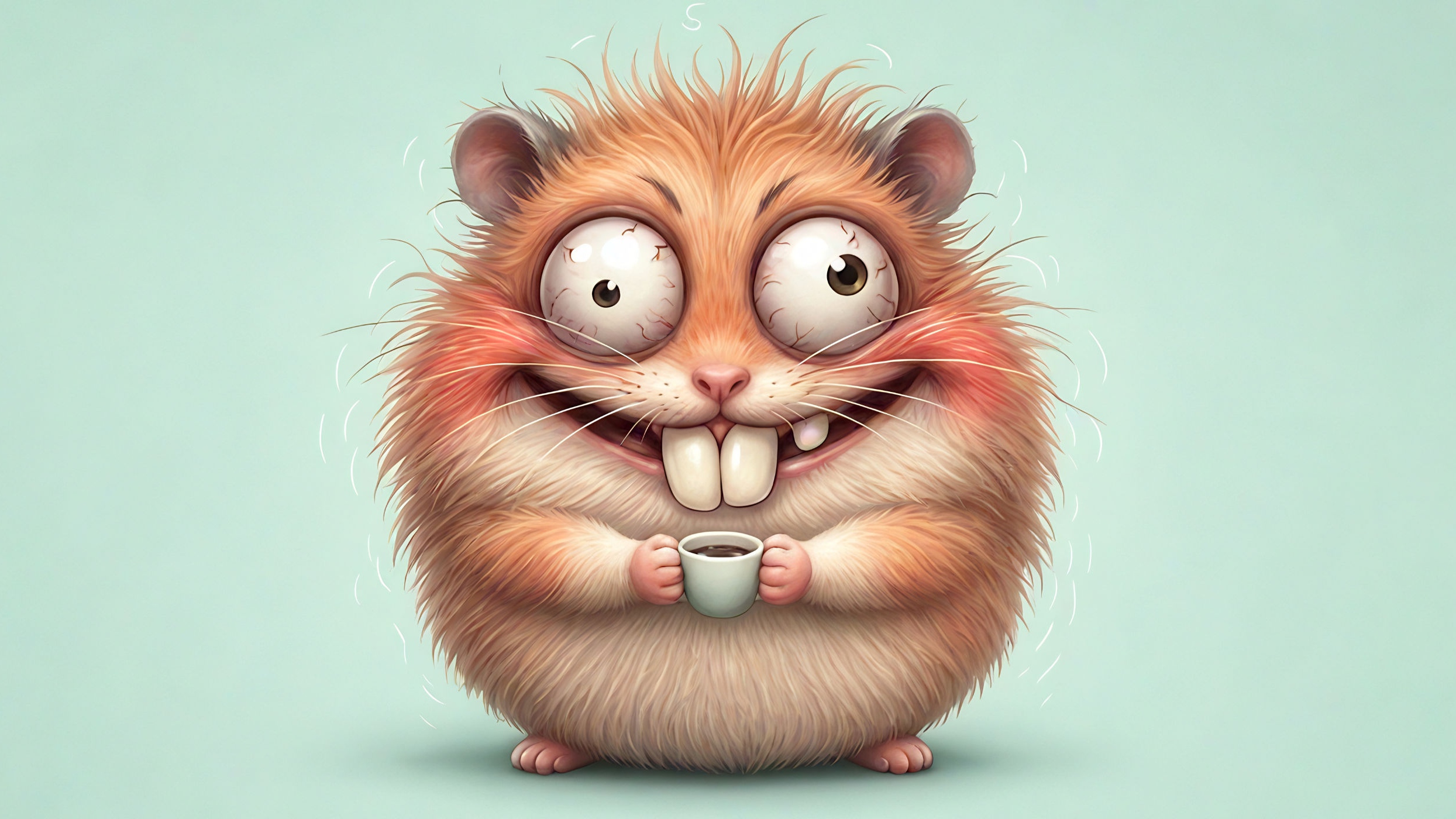
Here is something that sounds wrong the first time you hear it: your coffee has never once given you energy. Not a single joule. Whatever that first warm mug of the day seems to hand you, it is not fuel, and the gap between what caffeine feels like it is doing and what it is actually doing turns out to explain an enormous amount about your sleep, your anxiety levels, and why you seem to need a bit more of it every year.
Caffeine is one of the most widely used psychoactive substances on the planet. Most of us take it daily, often before we are even properly awake, and yet very few people could tell you what it does once it reaches the brain. It does not top you up. It does not add anything. What it does is quietly intercept a message your body is trying to send you, and once you understand that one mechanism, the whole relationship starts to look rather different.
Caffeine Doesn't Give You Energy. It Hides the Truth.
Here is the first thing worth getting straight, because almost everyone gets it wrong. Caffeine does not create energy. Your body makes a chemical called adenosine, and all day long, from the moment you wake up, it slowly accumulates in your brain. The more of it that builds up, the sleepier you feel. It is your brain keeping an honest running tally of how long you have been awake and how much rest you are owed. As Dr Sergi Ferre, a brain scientist at the NIH, puts it plainly, "The sleepiness you feel at the end of the day, that's adenosine."
Caffeine works by blocking adenosine from landing on your brain cells. It is roughly the same shape, so it slots into the same parking spaces, leaving the real adenosine circling with nowhere to dock. The tiredness signal is still being sent. Your brain simply cannot hear it any more.
Think of it like putting a piece of tape over the low fuel warning light on your car. The light stops glaring at you, which is a relief, and for a while you can carry on driving as though everything is fine. But you have not added a single drop of petrol to the tank. The moment that tape comes off, the light is still there, blazing away, because the underlying problem was never actually solved. Caffeine is the tape. Your sleep debt is the empty tank.
This is why the crash when caffeine wears off can feel so brutal. All the adenosine that was queuing up while the receptors were blocked suddenly floods in at once, and the tiredness you had been holding at bay arrives all together, with interest.
The Half-Life Problem: Your Lunchtime Latte Is Still Clocked In at Bedtime
Caffeine is a slow guest to leave. Its effects usually start within about 30 minutes and can last five hours or considerably longer. The number that really matters, though, is its half-life: the time your body needs to clear just half of what you consumed.
For caffeine, that half-life sits at roughly five hours on average, though it ranges anywhere from two to twelve hours depending on the person. Sit with what that actually means. If you have a coffee containing 200mg of caffeine at 2pm, then around 100mg is still swilling about in your system at 7pm. By midnight, a decent chunk of that is still there, quietly holding the adenosine at arm's length while you are trying your best to drift off.
You may not feel wired. You might fall asleep perfectly well. That is the part that catches people out, because the damage is happening below the surface where you cannot see it. Which brings us to the most eye-opening piece of the whole caffeine story.
What Caffeine Really Does to Your Sleep (Even When You Sleep Fine)
Researchers at a sleep disorders centre in Detroit ran a study that should be printed on the side of every takeaway cup. They gave healthy volunteers a dose of caffeine equivalent to a couple of strong coffees, then measured their sleep. The clever twist was the timing. Sometimes the caffeine was given right at bedtime, sometimes three hours before, and sometimes a full six hours before bed. Six hours. That is an afternoon coffee, the sort you would swear blind has nothing to do with your evening.
The results were striking. Even when taken a full six hours before lights-out, caffeine measurably disrupted sleep. Using an objective sleep monitor rather than just asking people how they felt, the researchers found caffeine knocked more than an hour of actual sleep off the night, cutting total sleep time by over an hour across the board. The people in the study were not necessarily lying awake feeling buzzed. Their sleep was simply thinner and shorter than it should have been, and they were losing time they did not know they were losing. The researchers concluded that you want to steer clear of any serious caffeine for a minimum of six hours before bed, and the Sleep Foundation nudges that cut-off out to a full eight hours to be safe.
It gets a little worse, and here is where the mental health angle sharpens into focus. Caffeine does not just shorten sleep, it changes its shape. It specifically eats into your slow-wave sleep, the deep, heavy, physically restorative stage that does the real overnight maintenance. Deep sleep is when your brain does much of its emotional housekeeping, filing away the day and steadying your mood for tomorrow. Skimp on it night after night and you do not just wake up groggy. You wake up more irritable, more reactive, and less able to cope with ordinary stress. The coffee that felt like it was helping you keep up is quietly kicking the legs out from under the very thing that keeps you emotionally level.
The Wired-But-Exhausted Loop
Now put those two facts together and you get one of the most common, most exhausting traps in modern life.
You do not sleep quite enough, partly because yesterday's caffeine was still lingering. So you wake up tired. To deal with being tired, you reach for caffeine. That caffeine then interferes with tonight's sleep, so you wake up tired again tomorrow, and reach for a little more. The Sleep Foundation calls this exactly what it is: a vicious cycle, where caffeine deepens the sleep loss that makes you crave caffeine.
The cruel part is that caffeine cannot actually repay the debt. It can mask tiredness for a few hours, but it is no substitute for a genuine night's rest, and eventually the accumulated exhaustion reaches a point where no amount of coffee touches it. You end up in that horrible, familiar state of being wired and shattered at the same time, jittery on the surface and bone-tired underneath. It is the caffeine equivalent of paying off one credit card with another and wondering why the balance never goes down.
Why "Just Have Another Coffee" Stops Working: Tolerance
If you have noticed that your morning coffee does not hit the way it used to, you are not imagining it, and you are not broken. Your brain has simply adapted.
When you feed it caffeine day after day, it responds in a rather logical way. Since something keeps blocking its adenosine receptors, it builds more of them. More docking stations means more adenosine can get through despite the caffeine, so you need a bigger dose to feel the same lift. "The body adapts," as Dr Ferre says. This is tolerance, and it is why the two-cup habit slowly becomes a three-cup habit, becomes a habit you've frankly stopped counting.
It also explains why caffeine can leave some regular drinkers feeling oddly flat. Once your brain has grown all those extra receptors, your normal baseline shifts. Without caffeine you now feel worse than a non-drinker would, because you have more adenosine machinery than they do, all of it clamouring to be heard.
Caffeine and Anxiety: When the Jitters Are More Than Jitters
Ever had that moment where your heart is going a bit too fast, your thoughts are racing, your hands have the faintest tremor, and you cannot quite work out why you feel so on edge? Before you go hunting for a deep existential cause, it is worth counting how many coffees you have had.
Caffeine is a stimulant, and when you have more than your system is comfortable with, the effects spill over into territory that feels an awful lot like anxiety. The NIH notes that overdoing it can leave you feeling anxious, with a racing heart or an unsettled stomach. The Mayo Clinic goes further, warning that caffeine can increase the symptoms of anxiety in people who already live with it, alongside nervousness, a fast heartbeat and muscle tremors.
Here is the genuinely important bit. The physical sensations caffeine produces, the pounding heart, the shallow breathing, the restlessness, are almost identical to the physical sensations of anxiety itself. So for someone already prone to worry, a strong coffee can hand the brain a bundle of alarming bodily signals and effectively ask, "Something feels wrong, don't you think we should panic about it?" Your amygdala, the brain's threat detector, sounds the alarm, the mind goes looking for a reason, and a perfectly ordinary afternoon can tip into something that feels much heavier. It does not help that caffeine also dampens the calming systems working in the background; if you have read about GABA, the neurotransmitter that quietens an anxious brain, it is worth knowing that heavy stimulant use pushes your nervous system in the opposite direction. If your anxiety tends to spike and you cannot pin down why, your caffeine intake is one of the first, easiest things worth examining.
Everyone's Different, and That's Genetics
None of this lands the same way for everyone, and that is not a matter of willpower or being tough. A large part of it is written into your DNA. How fast you break caffeine down depends heavily on your genes, which is why one person can have an espresso after dinner and sleep like a stone, while another is still staring at the ceiling at 1am after a single mid-morning flat white.
Other factors nudge the dial too. Smoking can roughly halve caffeine's half-life, so smokers clear it faster, whereas in later pregnancy the body processes caffeine so slowly that its half-life can double. The practical takeaway is refreshingly freeing: comparing your caffeine tolerance to anyone else's is a bit pointless. The only meaningful measurement is how it makes you feel and how you sleep.
Cutting Back Without the Headache From Hell
If any of this has you eyeing your mug with suspicion, a word of caution before you go cold turkey tomorrow. Quitting caffeine suddenly can bite back. Because your brain has grown all those extra adenosine receptors, whipping the caffeine away leaves them fully exposed, and the result is withdrawal: headaches, heavy tiredness, low mood, crankiness and trouble concentrating. The good news is that these symptoms are usually mild and pass within a few days as your brain recalibrates.
The trick is not to slam the brakes but to ease off the accelerator. A gentle, gradual reduction gives your brain time to dismantle the extra machinery without staging a protest. Some practical ways to do it:
- Count what you're actually having. Caffeine hides in tea, cola, energy drinks, dark chocolate and even some painkillers, so the real total is often higher than you think.
- Trim by one. Drop a single cup or can a day, or switch one of them for a smaller size, rather than eliminating everything at once.
- Draw a line in the afternoon. Making your last caffeinated drink an earlier one protects your sleep even if you change nothing else.
- Lean on decaf and herbal teas. Swapping one regular coffee for a decaf keeps the ritual and the warm mug while quietly dropping the dose.
For most healthy adults, the goal is not necessarily zero. Both the FDA and the Mayo Clinic reckon up to about 400mg a day, roughly four cups of brewed coffee, is fine for most people. The point is not to fear caffeine. It is to use it deliberately rather than letting it use you.
Myth vs Fact
A few stubborn beliefs cling to caffeine, so it is worth clearing the fog.
Myth: "Caffeine doesn't affect me, I can drink it and fall straight asleep." Falling asleep and sleeping well are two different things. As the research shows, caffeine can quietly strip out your deep sleep even when you drop off without any trouble, so the fact that you nodded off is not proof it did no harm. You can sleep through a bad night's sleep.
Myth: "A coffee will sort out a bad night." It will make you feel more alert for a few hours, but it cannot rebuild the sleep you missed. If you have spent the night unable to switch your brain off, caffeine papers over the tiredness without touching the underlying deficit, which is still sitting there waiting to collect.
Myth: "Caffeine causes anxiety disorders." This one needs nuance. Caffeine does not create an anxiety condition out of nowhere, but it can absolutely stir up the physical symptoms and make existing anxiety noticeably worse. For some people, dialling it down is one of the simplest and most underrated things they can do for their mental health.
Fact: caffeine is genuinely useful. None of this makes coffee the enemy. Used thoughtfully, it sharpens focus and lifts a sluggish morning. The trouble only begins when the dose creeps up and the timing drifts later.
Working With Caffeine Instead of Against It
The most useful shift is to stop thinking of caffeine as free energy and start treating it as a loan. It is genuinely handy for a sharp, focused morning, and there is real pleasure in a good cup of coffee that no killjoy article should try to take from you. But every dose is borrowed alertness that has to be repaid, usually out of your sleep account, and the interest rate climbs the later in the day you borrow.
A few strategies to try, none of which require giving anything up:
- Front-load it. Keep your caffeine to the morning and early afternoon so it has cleared out before it can gatecrash your sleep. If you are in bed by 11pm, treat 3pm as your daily caffeine curfew.
- Notice the anxiety link. If you feel jittery or on edge, treat your intake as a suspect worth investigating before assuming something bigger is wrong.
- Don't use it to paper over sleep loss. If you are constantly reaching for another cup just to stay upright, the honest fix is more sleep, not more coffee. Caffeine can hide the fuel light, but only rest fills the tank.
- Let the crash inform you. A rough comedown is a fairly reliable sign the underlying tiredness was real all along. Worth listening to rather than overriding.
Caffeine is not the villain here. It is a genuinely remarkable molecule, and used with a bit of awareness it can make your day sharper and your morning more bearable. The trouble only starts when it quietly runs the show without your noticing, nibbling away at your sleep and cranking up your anxiety while presenting itself as the solution to both. Knowing what it is really doing, blocking a signal rather than adding anything, hands the control back to you. The next time you reach for the kettle at 3pm, you will at least know exactly what deal you are making, and roughly when the bill is due.
None of the above is medical advice, and it is not a diagnosis. If caffeine seems to be seriously affecting your sleep, your mood or your anxiety, or you are finding it genuinely hard to cut back, it is always worth having a chat with your GP.