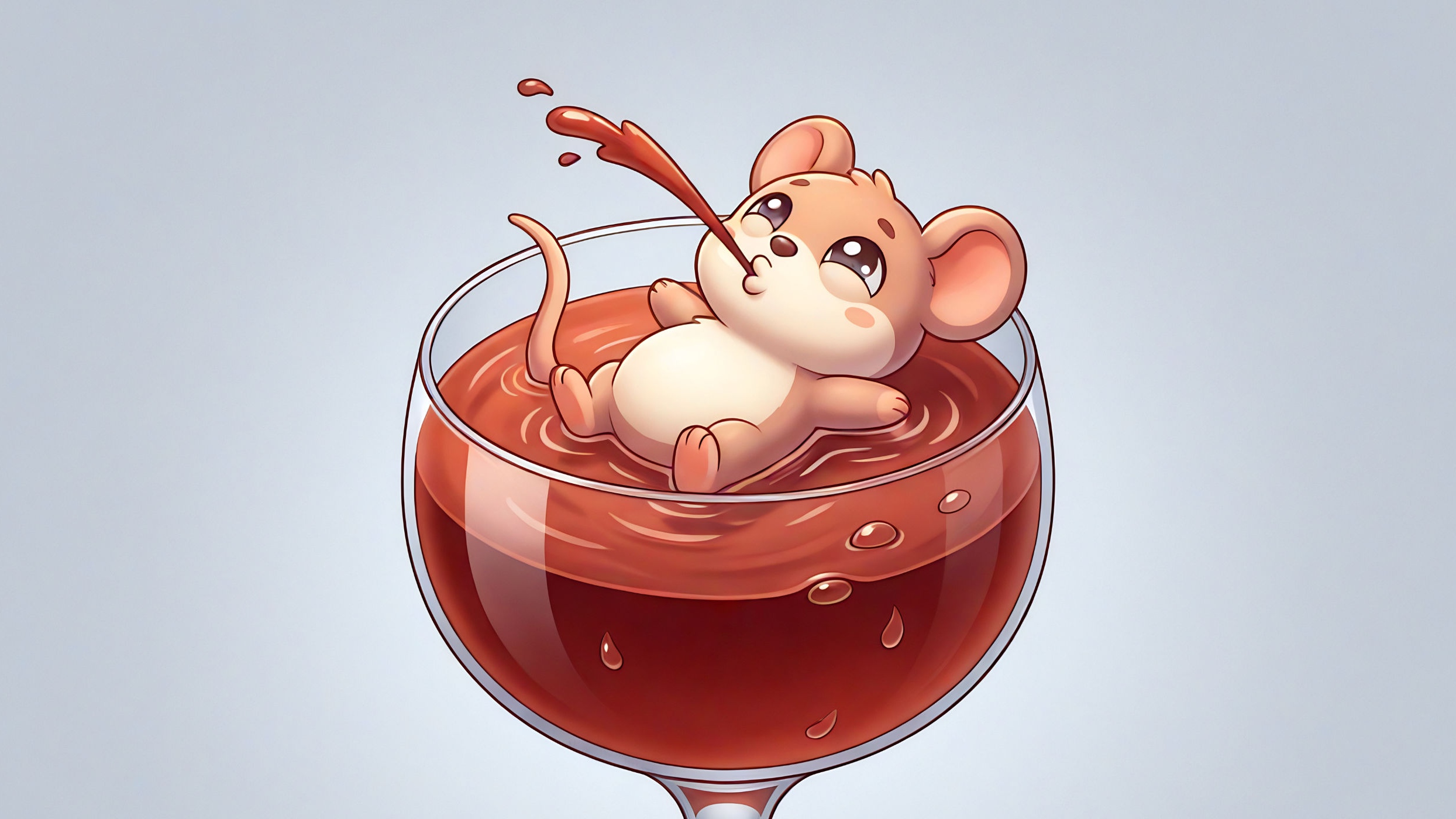
It's 9pm. The emails have finally stopped pinging, the kitchen is quiet, and you pour a glass of red. The first sip lands somewhere between your shoulders and your ribs, and you feel the day start to loosen its grip. By the bottom of the glass your eyelids are heavy and bed suddenly sounds like the best idea you've had all week. This, you tell yourself, is what winding down feels like.
And here's the uncomfortable part: that feeling is real. You genuinely are more relaxed. You probably will fall asleep faster. The problem is that what happens next, in the dark hours when you're not awake to notice, tells a completely different story; one where the very drink you reached for to calm your mind ends up leaving you more anxious, more wired, and more tired than if you'd skipped it altogether.
The nightcap is one of the most quietly believed myths in modern life. According to the National Council on Aging, around 67% of people who use alcohol as a sleep aid believe it actually helps them sleep. Two thirds of users, convinced of something that the science fairly consistently contradicts. That's not a small misunderstanding. That's a nation of tired people trusting the wrong friend at bedtime.
So let's pull the nightcap apart properly, because the gap between how wine feels and what it does turns out to be one of the most important things you can understand about your sleep and your state of mind.
Why Wine Feels Like It Works (The Sedation Trap)
Start with the feeling, because the feeling is where the myth lives.
Alcohol is a sedative. That word matters, because sedation and sleep are not the same thing, even though they can look identical from the outside. Think of it like the difference between a child who drifts off after a calm bath and story, and a child who's been spun around until they collapse on the sofa. Both ends up horizontal with their eyes shut. Only one of them is actually resting.
What alcohol does is press down on your central nervous system. It enhances the activity of GABA, the brain's main "slow down" chemical, while dialling back glutamate, the "speed up" one. The result is that pleasant heaviness, the quietening of the mental chatter, the sense that everything has been turned down a notch. Your brain isn't being eased into sleep so much as it's being chemically pushed offline.
The Sleep Foundation puts it plainly: alcohol does reduce the time it takes to fall asleep, which is exactly why it feels effective. You drink, you get drowsy, you nod off quicker than usual. If your only measure of "good sleep" is how fast you lose consciousness, wine looks like a triumph.
But falling asleep quickly is the easy part of the night. Anyone can nod off. The real test of sleep is what happens across the next eight hours, and that's where the sedation trap snaps shut. The thing that knocked you out at 10pm is about to become the thing that wakes you at 3am.
What Actually Happens to Your Brain at 3am
Here's the part nobody feels happening, which is precisely why the myth survives.
Your body treats alcohol as something to be cleared out, and it gets to work metabolising it the moment it arrives. For the first half of the night, while there's still plenty of alcohol in your system, you're sedated and your sleep looks deceptively settled. But alcohol specifically suppresses REM sleep, the dream-rich stage your brain leans on to process emotions and consolidate memory. A foundational 2013 review of alcohol's effects on normal sleep established the pattern that later research keeps confirming: faster sleep onset, suppressed REM, and increasing disruption in the second half of the night, with the effects scaling up the more you drink.
Then comes the rebound. As your liver finishes clearing the alcohol, usually somewhere in the small hours, the sedative effect doesn't just fade; it overshoots. Your brain, which spent the evening being pressed down, springs back up like a held-down beach ball released underwater. REM comes flooding back (often as vivid, unsettling dreams), your sleep fragments into a series of brief wakings, and you surface into that bleary, why-am-I-awake state at 3am, staring at the ceiling. If you've ever wondered why you keep waking at 3am for no obvious reason, an evening drink is one of the most common culprits hiding in plain sight.
Researchers describe this as alcohol disrupting your sleep's natural balancing system; a study on how alcohol disrupts sleep homeostasis found it interferes with the very mechanisms that are meant to keep your sleep stable and deep through the night. So the picture is a night of two halves: a sedated, REM-starved first half, and a broken, restless, over-stimulated second half. You might still log eight hours in bed. You're just not getting eight hours of the sleep that actually repairs you.
And this isn't only a one-off problem for heavy nights. A 36-year twin study published in SLEEP Advances tracked alcohol use and sleep quality across decades and found that heavier drinking was linked to poorer sleep quality over the long run. The nightcap, repeated often enough, doesn't stay a private evening habit. It becomes a pattern your sleep carries for years.
The Anxiety Loop Nobody Warns You About
This is where the nightcap stops being a sleep story and becomes a mental health one, because the rebound doesn't just wreck your sleep. It comes for your mood.
Remember that GABA-up, glutamate-down trade alcohol makes to relax you? Your brain notices the imbalance and tries to correct it, throttling back its own GABA and ramping up glutamate to compensate. It's a sensible bit of self-regulation while the alcohol is present. The trouble starts when the alcohol leaves and the compensation is still running. Now you've got suppressed GABA and surging glutamate with nothing to balance them, which is a recipe for a brain stuck in the "accelerator" position: jittery, alert, and primed for worry.
You may know the daytime version of this by its nickname: "hangxiety," that low hum of dread the morning after drinking, often with no real cause attached to it. But you don't need a hangover to feel it. Even a couple of glasses can leave you waking at 3am with your heart going slightly too fast and your mind reaching for something to be anxious about. Stack a cortisol surge on top (alcohol initially lowers this stress hormone, then lets it rebound and climb, often while you're asleep) and your body is essentially running a low-grade stress response at the exact moment it's meant to be recovering.
Drinkaware describes the mechanism well: regular drinking trains your body to expect alcohol's sedative effect, and when the alcohol clears, your brain can react with a heightened "fight or flight" response that mimics anxiety itself. The relief was real. It was also a loan, and the interest is paid back in the early hours. (If you want the fuller picture, it's worth reading more on alcohol's effects on our mental health.)
Then the loop closes. Poor, fragmented sleep is one of the most reliable triggers of next-day anxiety and low mood there is. A single broken night already leaves most people more emotionally reactive and quicker to catastrophise; do it night after night and that frayed, slightly-too-alert feeling stops being an occasional state and starts to feel like your personality. So you wake up tired and on edge, you carry that frayed feeling through the day, and by 9pm you're standing in the kitchen reaching for the one thing you've learned reliably takes the edge off. The wind-down that promised calm has quietly become the engine of the anxiety it was supposed to fix. The Mental Health Foundation notes this self-medicating pattern directly: the more you lean on alcohol to cope, the harder it becomes to cope without it.
The 67% Who Swear It Helps (And Why They're Misreading It)
The quick version, if you only remember three things:
- Myth: Wine helps me sleep. Fact: It helps you fall asleep, then wrecks the rest of the night.
- Myth: A nightcap relaxes me. Fact: The calm is sedation, and it rebounds into 3am anxiety.
- Myth: It's a harmless little ritual. Fact: The ritual helps; the alcohol sabotages it.
Now the longer version, because each of those deserves unpacking. So how do two thirds of people get it so wrong? They're not foolish. They're misreading good evidence.
Myth: "I sleep better after a glass of wine because I drop off faster." Fact: Falling asleep faster is the one thing alcohol genuinely does. But sleep onset is the least important measure of a good night. You're judging the whole meal by how quickly the starter arrived. The fragmented second half, the suppressed REM, the 3am wake-up; none of that is visible to you, because you're either asleep or too groggy to file it as evidence.
Myth: "I feel relaxed, so it must be helping my mental health." Fact: The relaxation is the sedation, and it's temporary. As Drinkaware points out, alcohol is a depressant that lowers serotonin and other mood-regulating chemicals over time, so the short-term calm comes at the cost of longer-term mood. You're feeling the loan, not the repayment.
Myth: "A nightcap is a harmless little ritual." Fact: The ritual part is doing real work, and it deserves credit; the warm glass, the dimmed lights, the moment of stillness all genuinely signal to your body that the day is over. The cruel twist is that alcohol then sabotages the rest your ritual was setting up. You can keep the ritual. It's the wine that's the saboteur.
The reason the myth is so sticky is that the feeling and the outcome are separated by several hours of unconsciousness. You experience the benefit live and in person. You sleep through the cost. Of course 67% of people back the wrong horse; they only ever see it leave the gate.
It's Not Just the Sleep: The Gut and Mood Connection
There's one more thread worth pulling, because the nightcap's reach goes further than your sleep cycle.
Your gut and your brain are in constant conversation along what's known as the gut-brain axis, and a surprising share of your mood chemistry, including some of your serotonin and GABA, is influenced by the trillions of microbes living in your intestines. (That conversation runs both ways, which is partly why your sleep and your gut shape each other so tightly.) Alcohol is rough on that ecosystem. It disrupts the balance of gut bacteria and can loosen the gut lining, and research on the gut-brain axis in alcohol use links this disruption to changes in mood, cognition, and anxiety-like states.
Picture your gut microbes as a kitchen garden that helps supply the raw ingredients for your mood. A regular nightly dose of alcohol is like tipping a little weedkiller on the soil; not enough to kill everything overnight, but enough that over time the garden grows patchier and the supply gets less reliable. It's another quiet route by which the evening glass nudges your baseline mood downward, entirely out of sight.
None of this requires you to be a heavy drinker for it to matter. It's the regularity, the every-single-night-ness of the nightcap, that lets these small effects compound into something you feel as a persistent low hum rather than a single bad morning.
Healthier Ways to Actually Wind Down
Here's the good news, and it's genuinely good: most of what you love about the nightcap has nothing to do with the alcohol. It's the pause. The signal. The permission to stop. You can keep all of that and ditch the part that wrecks your sleep.
A few strategies worth trying:
- Keep the ritual, swap the glass. A warm, caffeine-free drink in the same glass at the same time gives your brain the same wind-down cue without the rebound. Chamomile tea is a strong candidate; it contains a compound called apigenin that gently binds to the same calming GABA receptors alcohol hijacks, but without the 3am payback. Other bedtime teas like valerian and lemon balm can play a similar role.
- Breathe your nervous system down. A few minutes of slow breathing, where your exhale is longer than your inhale, tells your body the threat has passed and dials down the same stress response alcohol falsely quietens. Try breathing in for four counts and out for six, for five minutes, lights low. A structured method like box breathing gives your mind something to hold onto if it tends to wander.
- Build a wind-down hour, not a wind-down drink. The reason wine feels like the off-switch is that it's the only deliberate pause in your evening. Give yourself a proper buffer between work and sleep; dim the lights, put the phone in another room, read something undemanding. The calm you're chasing is mostly in the slowing down, not the drinking.
- Move the drink earlier, not to bedtime. If you do want a glass of wine, having it with dinner rather than as the last thing before bed gives your body more time to clear it before you sleep, softening the worst of the second-half disruption.
- Be honest about caffeine and screens. The afternoon coffee and the late scroll are often the hidden reasons you feel you "need" something to switch off. Tackling those can make the nightcap feel a lot less necessary.
The aim isn't a joyless, monkish evening. It's to stop asking one drink to do a job it actively undermines, and to give that job to things that genuinely deliver: a cue, a pause, and a calm nervous system.
When the Nightcap Is a Bigger Signal
One last thing, said gently, because it matters.
For a lot of people, the nightcap is just a habit worth examining; swap a few evenings, notice you sleep better, move on. But if you find that you can't wind down without a drink, that the glass has crept up to two or three, or that the thought of an evening without it makes you uneasy, that's worth paying attention to. Not as a failing, but as useful information. Using alcohol to manage sleep or mood is one of the most common and understandable patterns there is, precisely because it works just well enough in the moment to keep you coming back.
If any of that rings true, it's worth talking to your GP or a professional who can help you untangle the sleep, the mood, and the drinking, which so often turn out to be the same knot. There's no judgement in it. There's just the chance to stop running a loop that's quietly costing you the rest and the calm you're trying to buy.
The nightcap makes a promise: relax, sleep, feel better. It keeps the promise for about ninety minutes and then takes back more than it gave. Once you can see the whole night instead of just the first sip, the glass loses a lot of its magic. And what's left, the warmth, the pause, the moment of stillness at the end of the day, turns out to be the part you wanted all along.